
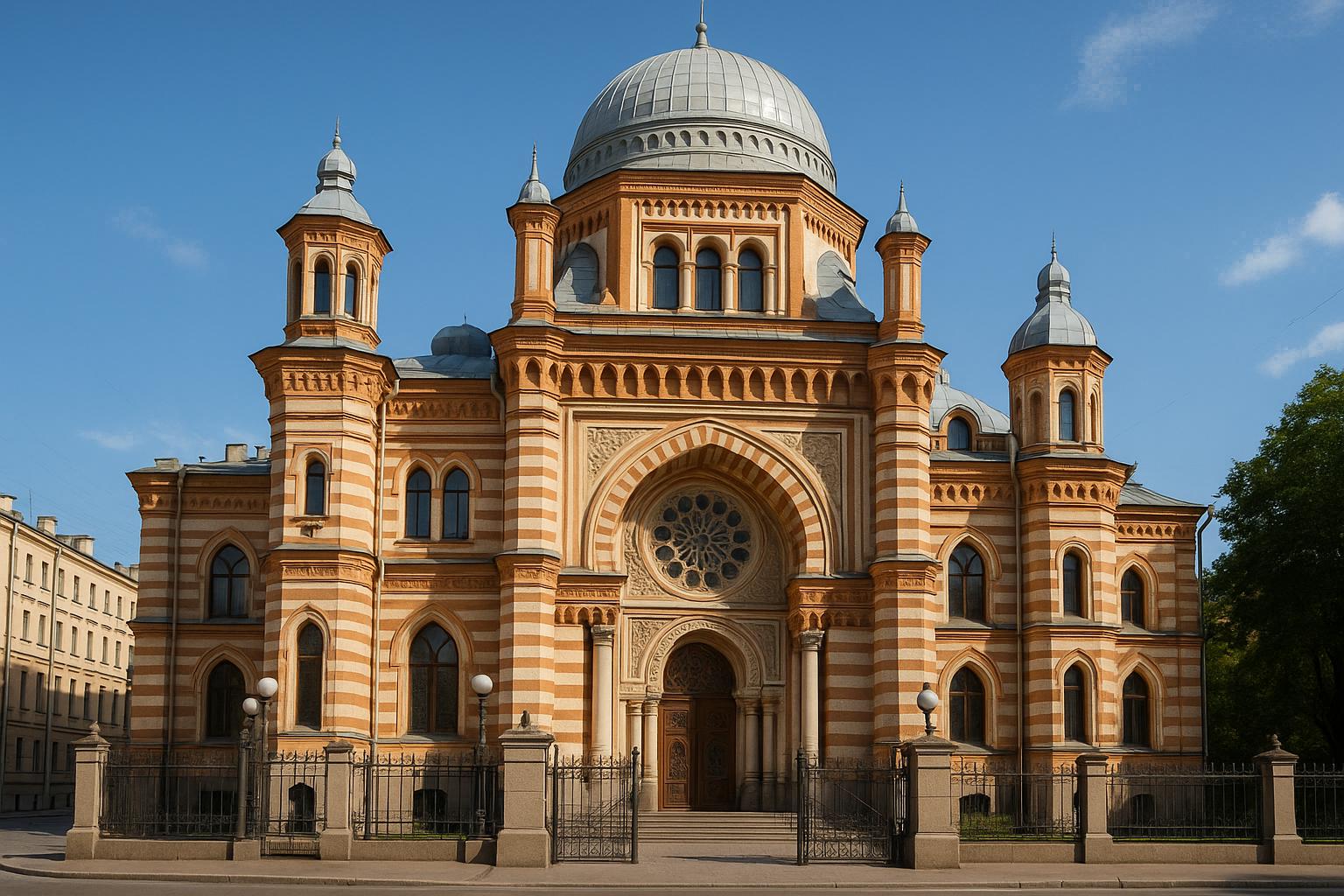
Overview of the Grand Choral Synagogue
The Grand Choral Synagogue, located in St. Petersburg, Russia, is a significant historical and architectural landmark. It is the second-largest synagogue in Europe, symbolizing not only religious traditions but also the resilience and cultural heritage of the Jewish community in Russia.
History and Construction
The story of the Grand Choral Synagogue is deeply intertwined with the broader narrative of Jewish history in Russia. Constructed between 1880 and 1888, the synagogue was designed by architects I. I. Shaposhnikov and A. V. Malov, with the assistance of L. Bakhman. The architectural style of the synagogue is a stunning blend of Moorish and Byzantine influences. This style is characterized by a distinctive dome and elaborate decorative motifs that imbue the building with a unique grandeur.
Challenges During Construction
The establishment of the synagogue was marked by several bureaucratic hurdles and opposition, reflecting the social and political climate of the time. Despite these challenges, the Jewish community was determined to construct a place of worship that would serve as a symbol of their faith and identity. The successful completion of the structure marked an important milestone for the Jewish population in St. Petersburg, serving as an expression of their cultural and religious endurance.
Architectural Features
Architectural excellence defines the Grand Choral Synagogue. Renowned for its grandiose design and detailed ornamentation, the synagogue features a large central dome and ornamental facades that highlight the Moorish architectural inspiration. Inside, visitors can admire beautiful stained glass windows that cast colorful light patterns in the sacred space. Intricate carvings adorn the walls, while elegantly designed spaces are available for prayer and community gatherings, providing an atmosphere that is both solemn and inspiring.
Main Hall and Facilities
The main hall of the synagogue is particularly impressive. With its high ceilings and extensive use of natural light, the hall creates an atmosphere that encourages reflection and community gathering. The design ensures excellent acoustics, making it a popular venue for concerts and community events. The synagogue also houses facilities for educational and social activities, including classrooms and lecture halls, which enhance its role as a community center that serves various educational and cultural needs.
Significance and Restoration
Throughout its storied history, the Grand Choral Synagogue has been more than just a place of worship; it has been a cornerstone of Jewish life in St. Petersburg. The synagogue has endured numerous challenges, particularly during the early 20th century, including periods of neglect and vandalism. These hardships reflect the broader struggles faced by the Jewish community during this tumultuous period.
Restoration Efforts
In an effort to preserve the synagogue’s historical significance, extensive renovation efforts were undertaken in the late 20th and early 21st centuries. Restoration aimed to return much of the synagogue’s original beauty, focusing on the detailed architectural elements that contribute to its designation as a landmark. Modernizing facilities was also a priority, ensuring that the synagogue could meet the needs of today’s congregants while continuing to honor its rich past.
Visiting the Synagogue
The Grand Choral Synagogue is open to the public, inviting both worshippers and those interested in its rich historical and architectural legacy. Visitors can admire its architectural splendor and gain insights into the rich history and cultural contributions of the Jewish community in St. Petersburg. Tours provide an opportunity to learn about this history firsthand from knowledgeable guides. For those planning a visit, it is advisable to check the synagogue’s official website for more information on visiting hours and guided tours.
Community and Educational Activities
The synagogue plays a pivotal role in the community, extending its reach beyond religious services. It hosts a variety of educational programs, cultural events, and community services. These activities are designed to welcome individuals from all backgrounds, fostering dialogue and a deeper understanding of Jewish culture and history. The synagogue also offers programs that cater to various age groups, ensuring that everyone from children to the elderly can engage with and benefit from these offerings.
Conclusion
The Grand Choral Synagogue stands as a testament to the enduring presence and cultural contributions of the Jewish community in St. Petersburg. A symbol of resilience and a beacon of faith, the synagogue continues to serve its community in multiple capacities—spiritual, educational, and cultural. Its blend of historical significance and architectural beauty makes it an essential visit for anyone interested in understanding the rich tapestry of Russia’s religious and cultural heritage. By preserving its past while embracing the future, the Grand Choral Synagogue remains a vibrant hub of Jewish life and a monument to the enduring spirit of its community.