
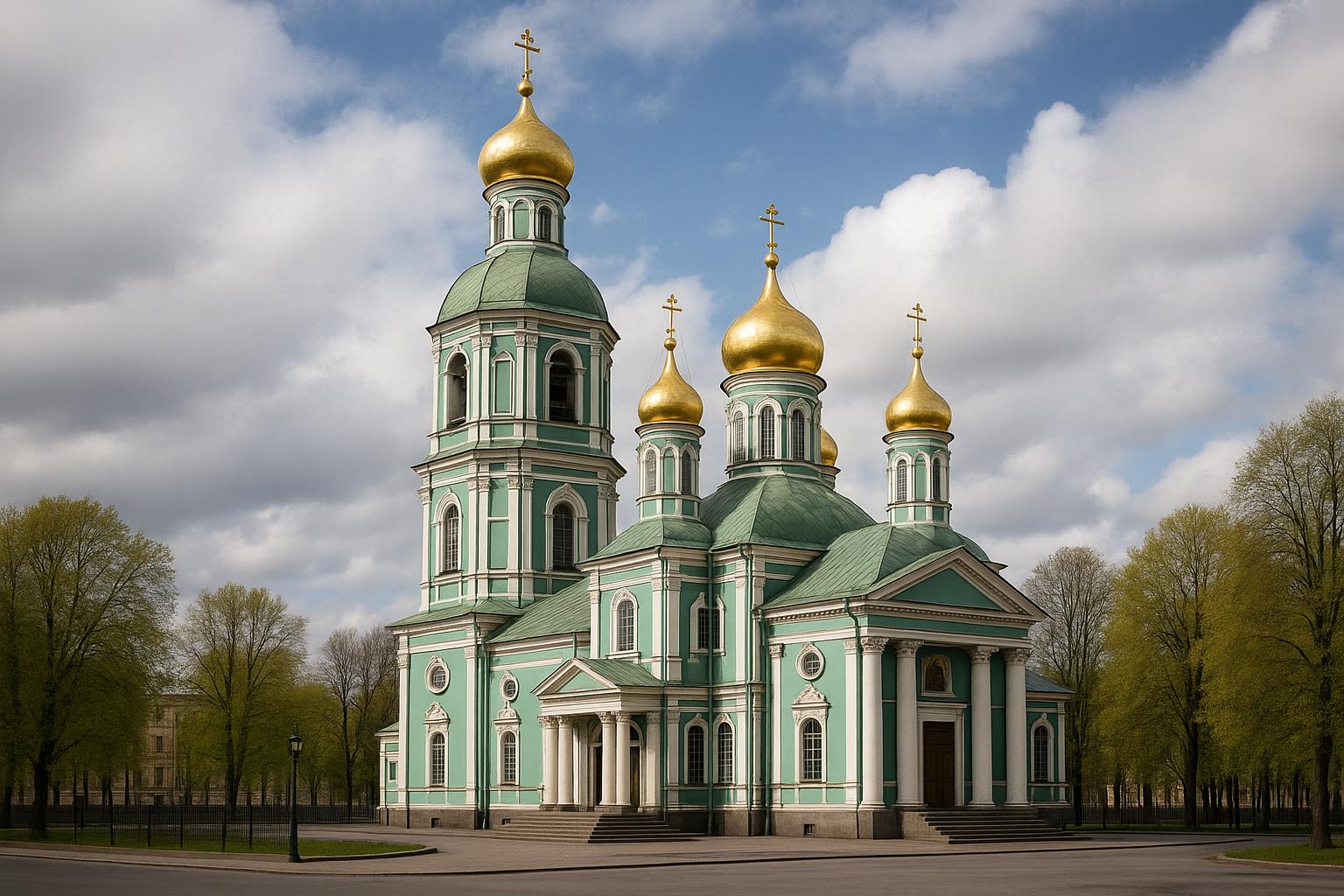
Overview of Saint Sampson’s Cathedral
Saint Sampson’s Cathedral is a significant landmark located in Saint Petersburg, Russia. Its foundation dates back to the early 18th century, playing a pivotal role both in the religious life of the city and as a cultural monument of Russian Baroque architecture. The cathedral’s historical and architectural value continues to attract both tourists and scholars interested in its unique past.
Historical Background
The original construction of Saint Sampson’s Cathedral was commissioned by Peter the Great and completed in 1710. It was built to commemorate the Russian victory over the Swedish army at the Battle of Poltava. The cathedral’s location in the Vyborgsky District holds immense significance as it serves as a testament to this historical event.
Architectural Features
Initially, the design of Saint Sampson’s Cathedral followed the Baroque style, characterized by its decorative elements and detailed façade. In later years, the cathedral underwent various renovations, incorporating elements of the Neoclassical style during the 19th century. Unique features include its elegant bell tower and the richly adorned interior, which showcases intricate frescoes and traditional Russian iconography.
Religious Significance
The cathedral is dedicated to Saint Sampson the Hospitable, a Christian martyr known for his acts of charity and healing. As a working church, it holds religious services and functions as a spiritual center for the local community. The veneration of Saint Sampson is evident through various religious relics housed within the cathedral, attracting pilgrims from different regions.
Preservation and Restoration Efforts
In recent years, Saint Sampson’s Cathedral has experienced extensive restoration to preserve its historical integrity and architectural details. These efforts aim to maintain the cathedral not only as a place of worship but also as an important cultural and historical venue. For more detailed information on the ongoing preservation projects, you can visit the official site.
In conclusion, Saint Sampson’s Cathedral remains an emblematic landmark in Saint Petersburg, offering insights into the architectural, religious, and historical narrative of the city. Its ongoing preservation efforts ensure that future generations can continue to appreciate this iconic structure.
Architectural Details and Influences
Saint Sampson’s Cathedral stands as an exemplar of distinct architectural styles, embodying both Baroque and Neoclassical elements. The Baroque architecture is visible in its ornate façade and use of intricate and lavish decoration. This style often manifests in elaborate motifs, which are quintessential to the grandeur of 18th-century ecclesiastical edifices across Europe.
The Neoclassical renovations of the 19th century introduced a more refined aesthetic, aligning with principles of symmetry and simplicity that were popular during that period. The elegant bell tower, in particular, highlights this synthesis of styles, bringing a sense of harmonious balance to the cathedral’s overall composition. One of the standout features of this architectural blend can be seen in the cathedral’s apse, adorned with finely detailed frescoes that draw inspiration from classical art and themes.
Symbolic Significance
The establishment of Saint Sampson’s Cathedral marked a period of substantial socio-political and religious change within Russia. Reflecting Peter the Great’s aspirations for a modern and powerful nation, the cathedral not only served religious purposes but also stood as a symbol of victory and triumph in the historical context of the Great Northern War. By commissioning its construction, Peter the Great also intended to solidify the Orthodox Christian faith as an integral element of Russian identity.
Interior Decoration
The interior of the cathedral is celebrated for its opulent decoration, with an emphasis on traditional Russian iconography. Rich frescoes adorn the walls, depicting sanctified events and religious figures central to the Orthodox Christian tradition. These frescoes, maintained and restored carefully over the centuries, add a layer of spiritual depth and historical continuity, connecting visitors with the past.
Beyond the visual grandeur, the cathedral’s acoustics are noteworthy, having been designed to enhance liturgical chants and hymns—an essential aspect of the Russian Orthodox worship experience. This aspect of design illustrates the thoughtful integration of function and form, providing a space conducive to spiritual contemplation and communal worship.
Community Role and Events
Even as it stands as an architectural marvel, Saint Sampson’s Cathedral plays a pivotal role within the local community. It actively hosts a variety of religious services and rites, including weddings, baptisms, and seasonal festivals. These events are significant not only for community cohesion but also for preserving traditions that have been passed down through generations.
Furthermore, the cathedral occasionally serves as a venue for cultural events and concerts, attracting people from all walks of life. Through these events, the cathedral acts as a bridge between historical heritage and contemporary cultural engagement, reinforcing its relevance in today’s society.
Conservation and Future Prospects
The ongoing restoration and conservation efforts are crucial to ensuring the longevity of Saint Sampson’s Cathedral. These initiatives focus on maintaining architectural and artistic features, using modern technology and techniques to repair and preserve the structure. Areas such as the frescoes and stonework receive particular attention from conservation teams, who strive to prevent deterioration while respecting historical authenticity.
Looking ahead, the success of these preservation projects ensures that the cathedral will continue to be a beacon of cultural and religious significance. As Saint Petersburg grows and evolves, Saint Sampson’s Cathedral remains a constant, a testament to the city’s rich tapestry of history, art, and faith. Scholars and enthusiasts alike will find the cathedral a source of inspiration and insight, a gateway into the enduring legacy of Russian Orthodox architecture and its place within the broader narrative of the city’s development.