
Chesme Church: A Historical Overview
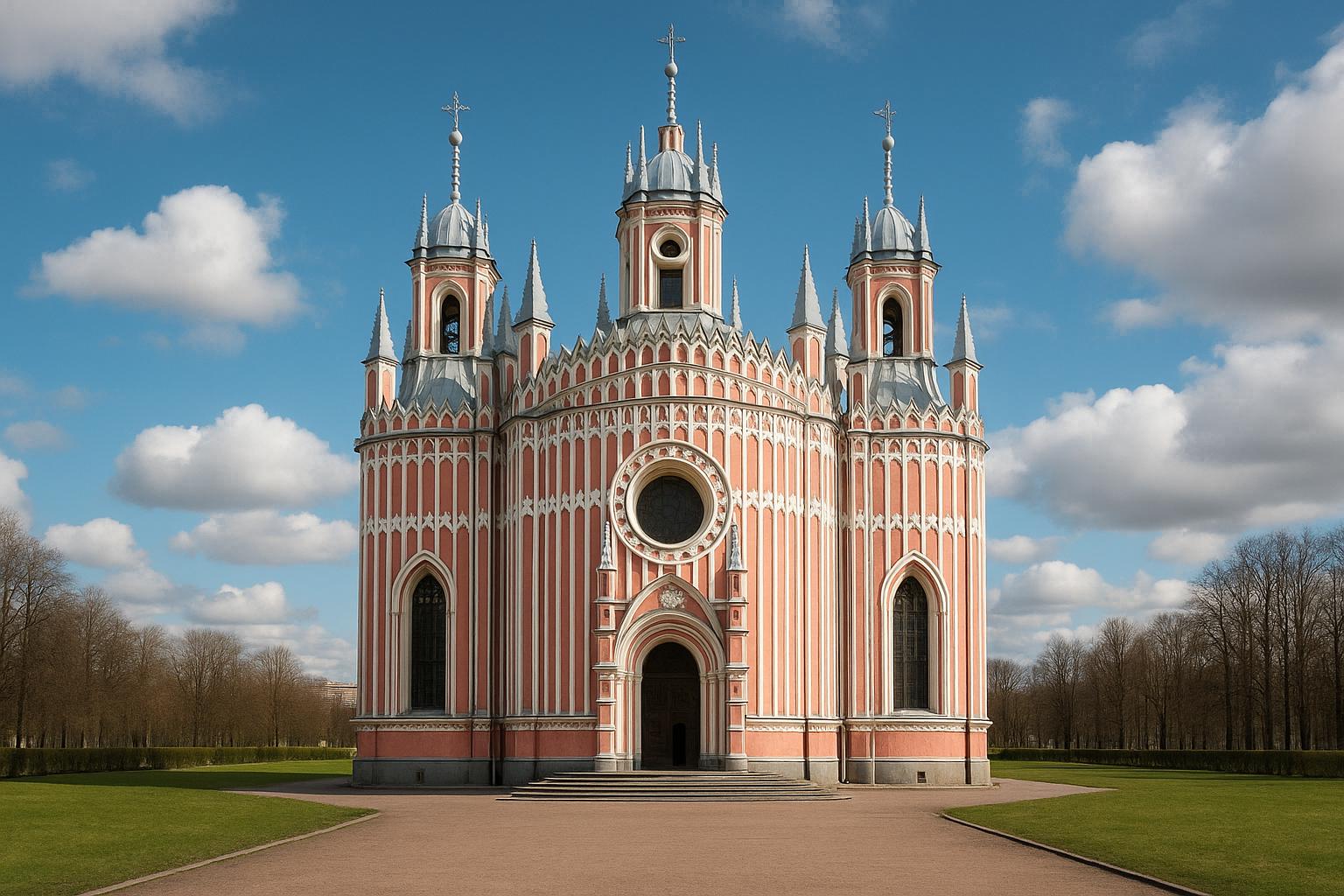
The Chesme Church, also known as the Church of Saint John the Baptist at Chesme Palace, is a notable architectural and historical landmark located in Saint Petersburg, Russia. Erected during the reign of Empress Catherine the Great, the church stands as a quintessential example of Russian Gothic Revival architecture. Its rich history and striking appearance make it a prominent feature in the cultural landscape of the city.
Architectural Design
The architectural design of the Chesme Church was overseen by Yury Felten. Its construction took place between 1777 and 1780. The church is a prime example of neo-Gothic architectural style, embodied through its distinctive elements such as pointed arches, pinnacles, and a facade characterized by red and white striped patterns. These vertical stripes create a dramatic visual impact, setting the Chesme Church apart as one of the most visually unique religious structures in Russia.
Interior Features
Despite the ornate exterior, the interior of the Chesme Church features a relatively austere design. The interior is decorated with several icons and paintings that reflect typical Russian Orthodox religious themes, offering visitors a glimpse into the spiritual artistry of the era. The church’s floor plan follows a cross-in-square design, a layout commonly found in many Russian Orthodox ecclesiastical buildings. This compact design reinforces the spiritual focus, emphasizing its functionality as a space for worship.
Historical Significance
The Chesme Church is not just an architectural spectacle; it holds deep historical significance as well. It was constructed to memorialize a crucial event: the Russian victory over the Ottoman Empire in the Battle of Chesma, which occurred on June 26, 1770. This naval clash was a pivotal moment in the Russo-Turkish War (1768-1774), making the church a symbol of Russian military achievement and national pride, enduring through the ages as a representation of triumph.
Chesme Palace Connection
The church is integrally connected to the larger Chesme Palace complex, which once served as a summer residence for the Russian nobility. Although the palace itself has experienced various transformations and renovations over the years, the church has maintained its original form, demonstrating its resilience and timelessness. Those interested in exploring more about the palace and its history can find further details through numerous historical archives (Chesme Palace History).
Current Use and Preservation
In the present day, the Chesme Church continues to serve as an active place of worship within the Russian Orthodox Church. It is recognized as a protected cultural heritage monument, with concerted efforts directed towards maintaining its unique architectural elements and preserving its historical significance. The church is open to visitors, providing an opportunity for both locals and tourists to engage with its exceptional design and essential role in Russian history.
Visiting the Chesme Church
The church’s location near the outskirts of Saint Petersburg makes it accessible through various public transportation options. Visitors intending to explore the church are encouraged to check for scheduled services and any potential visiting restrictions to ensure a smooth experience. For those with an interest in the architectural and historical depths of Russian religious structures, the Chesme Church presents itself as a remarkable and enriching destination.
In conclusion, the Chesme Church embodies more than just architectural brilliance; it is a pivotal historical site that encapsulates significant elements of Russia’s cultural and military history. Its blend of Gothic Revival style with deep-rooted historical significance renders it a compelling subject of study and admiration for scholars and enthusiasts alike.