
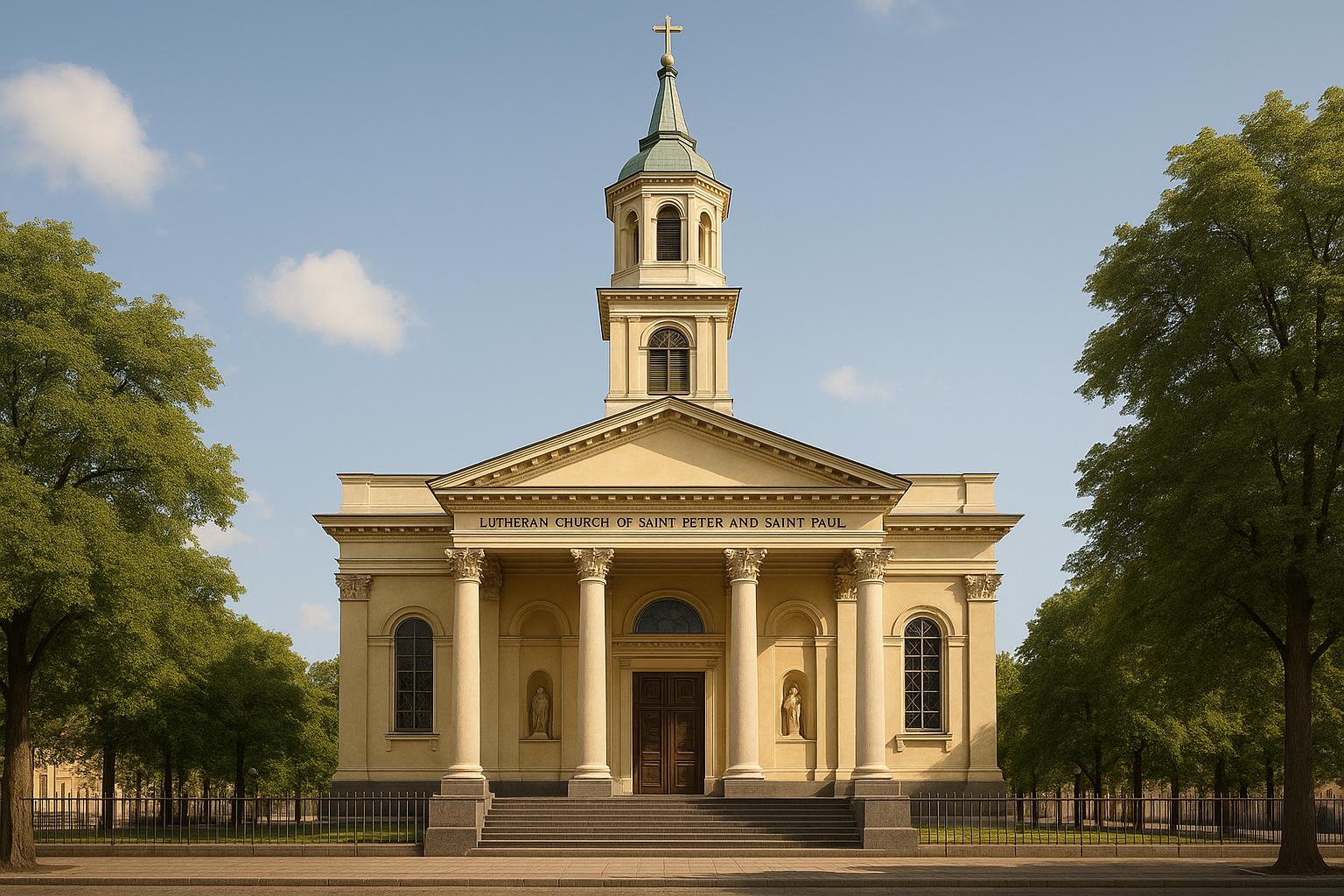
The Lutheran Church of Saint Peter and Saint Paul
Located in the vibrant city of St. Petersburg, Russia, the Lutheran Church of Saint Peter and Saint Paul is a remarkable religious and historical landmark. Though initially constructed to serve the city’s thriving German community, today, it embodies a broader representation of the Lutheran population in the city. Its story intricately weaves together aspects of cultural heritage, architectural splendor, and enduring community spirit.
History and Architecture
The Lutheran Church of Saint Peter and Saint Paul was established during a significant era in the early 18th century, a period marked by the rapid expansion of the German Lutheran community in St. Petersburg. This growth was largely encouraged by Peter the Great’s policies, which welcomed skilled foreigners to help modernize Russia. Construction of the church commenced in 1728, and upon its completion, it stood as a symbolic fixture of the city’s multicultural heritage and European-influenced progression.
Architecturally, the church was crafted in the Baroque style, known for its complex forms and extensive ornamentation. Characterized by bold motifs and decorative elements, it presents an imposing yet intricate façade. Its architectural brilliance is a fine example of how European influences found their expression in Russian religious architecture. Over the centuries, the church has undergone multiple renovations and restorations, each time carefully maintaining its structural integrity and aesthetic charm.
The Interior
Upon stepping inside the church, visitors are greeted by a majestic interior that captivates with its beauty and grandeur. The centerpiece is a grand altar, a focal point for worshippers and a testament to the dedicated craftsmanship of the era. Adding to the church’s allure is a remarkable organ, constructed in the late 19th century. This exquisite instrument holds a prominent place in the church’s history and continues to be a significant aspect of its vibrant musical culture. It frequently features in concerts, enriching the community’s musical landscape and drawing visitors with an appreciation for sacred music.
Challenges and Resilience
The church’s narrative is not solely one of architectural beauty; it is also a story of resilience. Throughout its history, the Lutheran Church of Saint Peter and Saint Paul has faced numerous challenges, most notably during the Soviet era. This period was particularly harsh for religious institutions, many of which were either repurposed for secular use or completely destroyed. The church was not immune to this widespread trend, and it experienced a temporary cessation of its religious functions. However, it was not demolished, and its very survival stands as a testament to its resilience. In the late 20th century, the building was restored to the Lutheran community, symbolizing the broader revival of religious practice and community identity in post-Soviet Russia.
Current Role and Community
Today, the Lutheran Church of Saint Peter and Saint Paul serves a dynamic role as both a center for worship and a community gathering point. The church provides a spiritual home for those practicing the Lutheran faith and offers a vibrant space for cultural engagement. It regularly hosts diverse events, including concerts, lectures, and exhibitions, which continue to draw members of the local community and visitors alike.
The church’s cultural significance is enhanced by its commitment to serving as a bridge between the past and present, facilitating a deeper understanding of St. Petersburg’s rich historical narrative. It underscores the city’s diverse cultural tapestry, acting as a focal point where history, faith, and community intersect. For those interested in exploring more about this historic monument, further information on visiting hours, scheduled events, and detailed historical insights can be found on the church’s official website.
In conclusion, the Lutheran Church of Saint Peter and Saint Paul remains an ever-relevant symbol within St. Petersburg, deftly navigating the interplay between history and modernity. Its enduring presence invites reflection on the past while actively contributing to the cultural and spiritual fabric of the community. This church not only speaks to the historical influences that shaped the city but also highlights the ongoing importance of cultural and religious dialogue in fostering community cohesion. Through its doors, countless stories of faith, perseverance, and cultural fusion unfold, ensuring that the church remains a pivotal part of St. Petersburg’s identity for future generations.