
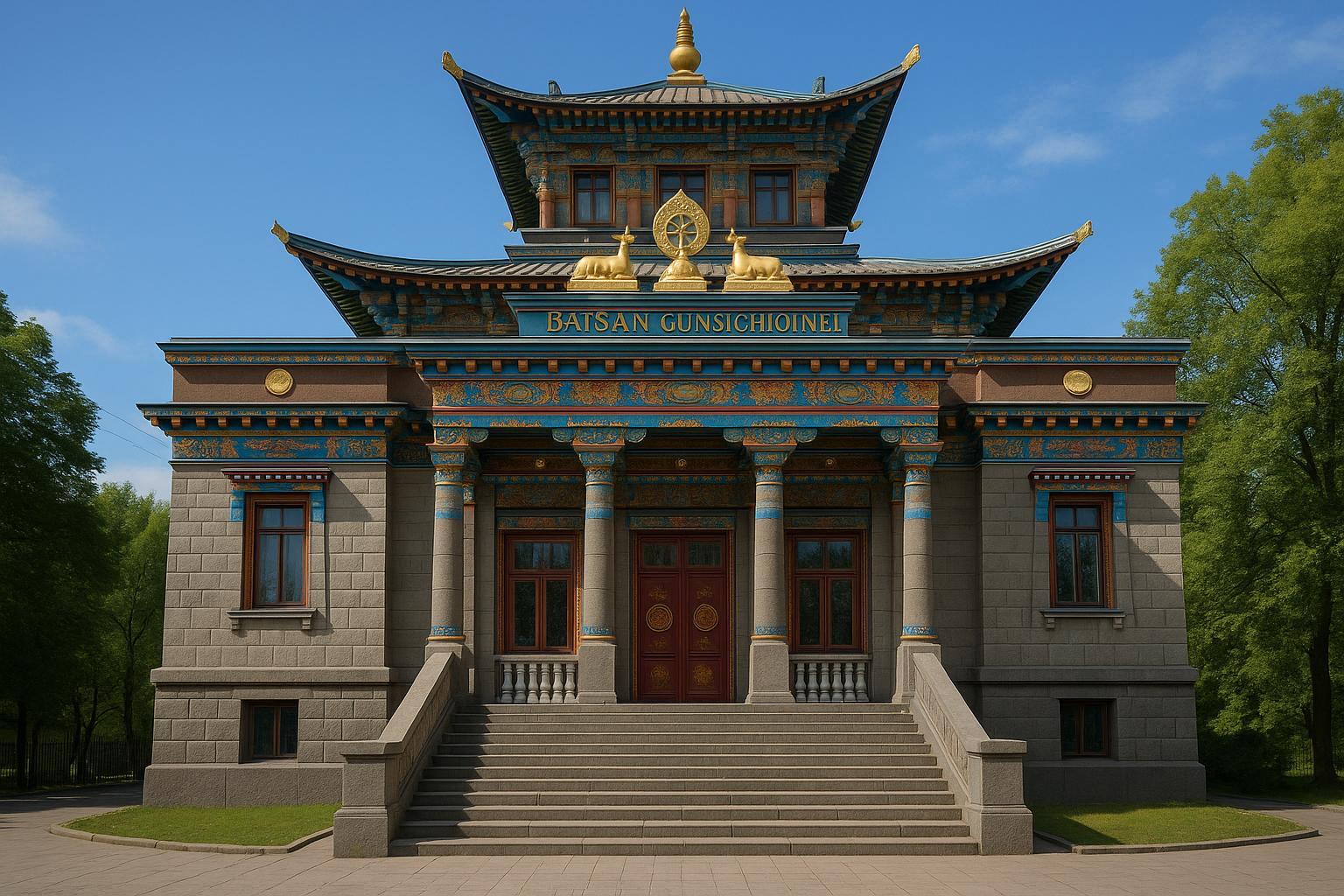
Buddhist Temple: Datsan Gunzechoinei
Location and Background
The Buddhist Temple known as Datsan Gunzechoinei is situated in the vibrant city of Saint Petersburg, Russia. This temple holds the distinction of being the northernmost traditional Buddhist temple in Russia. Established in 1915, it serves as a testament to the rich cultural and religious diversity prevalent in the region. Saint Petersburg, historically known as a melting pot of cultures, provides an intriguing backdrop for this temple. The temple itself is a fascinating representation of the fusion that can occur when different cultural and religious elements intersect in a single space.
Datsan Gunzechoinei was founded during a period of significant change worldwide, providing a place of solace for Buddhists amidst the challenges of the era. The temple’s establishment was driven by the vision of serving the spiritual needs of the Buddhist community in Russia and contributing to the broader cultural tapestry of Saint Petersburg. Its presence in a predominantly Christian society underscores the religious tolerance and cultural acceptance that characterized much of Russia’s historical development during the early 20th century.
For those interested in learning more about the temple’s history or planning a visit, ample resources exist online and through various cultural heritage sites and tourism portals. The temple’s rich history and majestic setting offer ample opportunities for exploration and understanding.
Architecture and Design
The architecture of Datsan Gunzechoinei is particularly noteworthy for its integration of traditional Buddhist design aesthetics with local architectural influences. The temple’s structure reveals the successful blend of the traditional Buddhist style with elements typical of Russian architecture, presenting a unique aesthetic that can be both surprising and enlightening.
Among its standout architectural features are the ornate decorations and classical motifs, which reflect both Buddhist theology and artistry. The temple’s builders used Siberian stone, and the structure showcases the capabilities and artistry of craftspeople who employed traditional techniques. This convergence of cultures is not merely aesthetic but carries a deeper symbolism of the fusion between the East and West.
Inside, the temple’s layout emphasizes symmetry and balance, common themes in Buddhist architecture that symbolize harmony and spiritual equilibrium. The interior spaces are designed to provide a conducive environment for meditation and reflection, with serene rooms that echo with reverence and spiritual depth. Every element, from the intricate woodwork to the elegantly crafted statues, adds to the overall spiritual ambiance of the temple.
Religious Significance
Datsan Gunzechoinei serves as a vital center for the Buddhist community in Russia, providing a place for worship, meditation, and cultural exchange. Within this serene space, practitioners find an environment conducive to spiritual growth and learning. The temple regularly hosts ceremonial practices that form a core part of its religious activities. These practices include traditional chanting sessions, meditation retreats, and seasonal festivals that commemorate significant events in the Buddhist calendar.
Educational events provide a platform for broader community engagement, attracting both local practitioners and international visitors interested in deepening their understanding of Buddhism. Moreover, the temple is involved in community outreach programs, which are fundamental in promoting religious education and fostering cross-cultural understanding. These educational initiatives are designed to enhance public engagement with Buddhist teachings and encourage dialogue among people of various beliefs.
In addition to these religious functions, the temple stands as a symbol of the enduring presence of Buddhism in Russia, serving as a spiritual beacon for followers across the region. It plays a critical role in the continuation of Buddhist traditions in the Russian context, ensuring that these rich cultural practices are preserved for future generations.
Visiting Information
Visitors to Datsan Gunzechoinei have the opportunity to explore its serene grounds and participate in various activities organized by the temple. The temple grounds offer a peaceful refuge from the bustle of Saint Petersburg, allowing visitors to engage with its rich cultural and spiritual offerings.
When planning a visit, it is advised to check current visiting hours and guidelines, as these may vary based on religious events and public holidays. During significant Buddhist festivals, the temple becomes a hub of activity with numerous ceremonies, granting visitors a unique glimpse into the vibrant practice of Buddhism in a Russian setting. For those less familiar with Buddhist rituals, these festivals offer an educational experience, illustrating the deep-rooted traditions kept alive by the temple.
Tourist information centers in Saint Petersburg serve as valuable resources, assisting individuals in planning their visit and providing insights into the temple’s historical context. These centers can guide visitors in understanding the significance of Datsan Gunzechoinei, not just as a religious site, but as a monument of cultural dialogue and historical significance.
In conclusion, Datsan Gunzechoinei stands as more than just a place of worship; it is a cultural and historical landmark that offers insights into the religious diversity of Russia. Its unique architecture and spiritual importance make it a worthwhile destination for those interested in exploring the interplay between history, culture, and religion. The temple embodies the resilience and continuity of Buddhist traditions in Russia. For scholars, tourists, and spiritual seekers alike, Datsan Gunzechoinei provides not only a point of connection with Buddhist practices but also a deeper appreciation of Russia’s multifaceted heritage. Through its doors, one can step into a world where the tranquillity of Buddhist philosophy meets the enduring structures of Russian architectural genius, creating a haven for reflection, learning, and cultural exchange.