
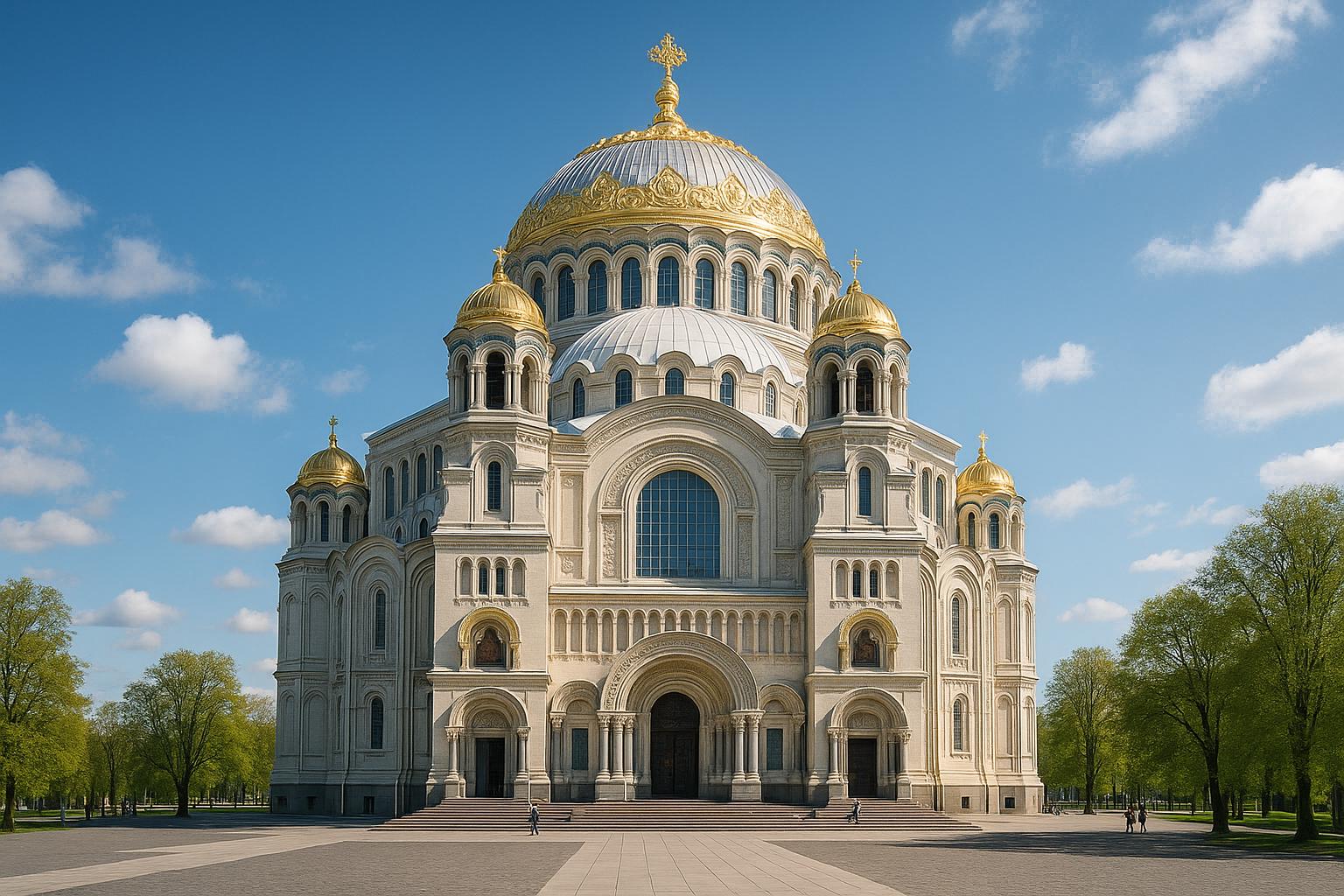
Overview of the Naval Cathedral of Saint Nicholas in Kronstadt
The Naval Cathedral of Saint Nicholas is a prominent landmark located on the island town of Kronstadt, part of the city of Saint Petersburg, Russia. Renowned for its architectural brilliance, this cathedral stands as a testament to both historical and cultural milestones. It functions as a naval temple and a significant tourist attraction, drawing visitors from across the world to marvel at its grandeur and explore its storied past.
Historical Background
The construction of the Naval Cathedral began in the early 20th century, led by the skilled Russian architect Vasily Kosyakov. The project commenced in 1903 and reached completion a decade later in 1913. The cathedral was built to honor Saint Nicholas, famously recognized as the patron saint of sailors, a vital consideration given the maritime essence of the location. It served as the main church for the Russian Navy, reflecting its critical role in spiritual and ceremonial functions before the onset of the Russian Revolution, a period which significantly altered its use and status.
Architectural Features
The Naval Cathedral is celebrated for its magnificent architectural artistry, adopting the Neo-Byzantine style that beautifully incorporates both structural grandeur and decorative finesse. The exterior of the cathedral captivates visitors with its intricately adorned domes and façades, clad in light-colored limestone. These features imbue the structure with a serene yet striking appearance. The central dome stands out as a focal point, triumphantly rising to a height of 70 meters, providing a defining feature of the Kronstadt skyline and symbolizing the harmonious marriage of engineering and art.
Interior Design
Stepping inside, the cathedral’s interior reveals an expansive and equally impressive spatial experience, designed to accommodate up to 5,000 visitors. The walls and ceilings are a visual feast, adorned with elaborate mosaics and frescoes that narrate biblical scenes intertwined with naval history. The art within the cathedral serves both aesthetic and educational purposes, offering insights into religious tales and maritime heritage. Enhanced by the presence of numerous icons and religious artifacts, the cathedral maintains a profound spiritual ambiance, resonating with both adherents and admirers of history and art.
Supporting Architectural Elements
Beyond its famous dome and interior artistry, the cathedral employs a variety of architectural elements that highlight its genius design. Key among these is the extensive use of arches and columns, lending structural support while contributing to the grandeur of its design. The cathedral’s floor plan is designed in the form of a Greek cross, emphasizing space and harmony, which are key tenets of Neo-Byzantine architecture.
Modern-Day Significance
In contemporary times, the Naval Cathedral stands as a vibrant hub, fulfilling roles both as an active church and as a museum. The tumult of the Soviet era saw the site fall into neglect, yet its enduring importance prompted a comprehensive restoration effort that was completed in 2013, coinciding with the cathedral’s centennial celebration. This restoration returned it to its former splendor, ensuring its preservation for future generations. Today, the cathedral attracts numerous visitors, fascinated by its architectural beauty and rich historical significance. It remains a hive of activity, with religious services and public tours highlighting its dual function as a spiritual haven and a cultural gem.
As a pivotal symbol within Kronstadt, the Naval Cathedral represents more than just religious significance; it encapsulates the spirit and resilience of its community. The restoration and ongoing preservation efforts are a testament to the combined commitment of local and national entities to maintain this historical site, reinforcing its relevance in both past and present contexts.
For more information on visiting the Naval Cathedral of Saint Nicholas and further exploring the historical richness of Kronstadt, consider leveraging various local tourism resources. These can offer additional insights into scheduled church services, museum exhibits, and special events that exemplify the living history of this extraordinary edifice.