
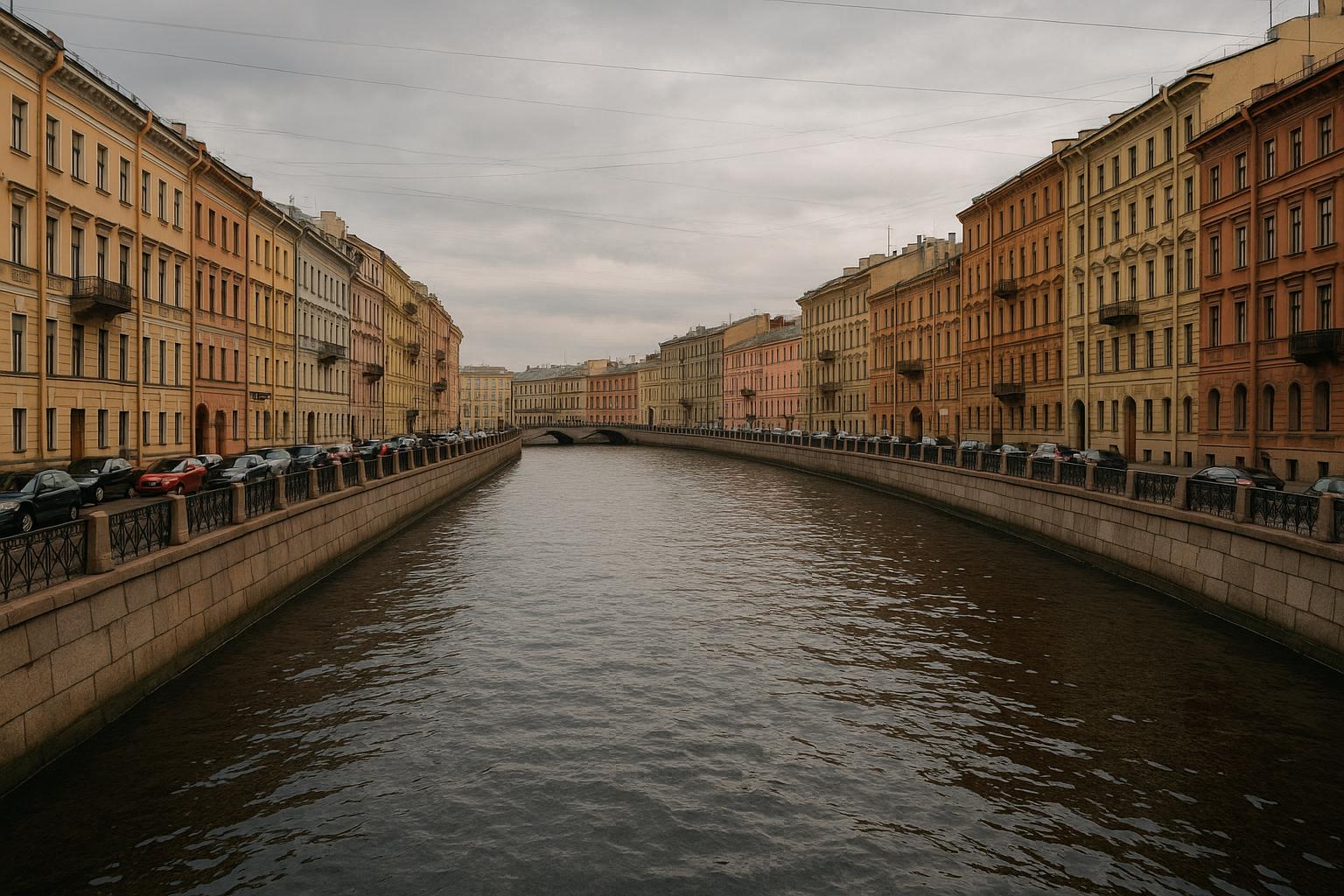
Overview of the Moika River
The Moika River is a notable waterway in Saint Petersburg, Russia. As part of the intricate network of rivers and canals, the Moika is central to the city’s essence and its reputation as “The Venice of the North.” Spanning approximately 5 kilometers, it not only enriches the city’s geography but also underpins its infrastructure.
Origins and Course
Situated in a city renowned for its waterways, the Moika River originates from the Fontanka River. It meanders through the central areas of Saint Petersburg before its confluence with the Neva River. Historically, this river has been an essential channel facilitating transportation and commerce. During the 18th and 19th centuries, the strategic location of the Moika River was pivotal in bolstering the economic growth of Saint Petersburg. The accessibility it provided was critical for trade, allowing goods to travel with relative ease through the heart of the city to various destinations.
Historic Importance
The significance of the Moika River extends well beyond commerce and transportation; it is also a silent witness to numerous monumental events in Russian history. The river’s banks are graced with several historical buildings and palaces, embedding the river within the cultural tapestry of Saint Petersburg. As the background for key moments during the reigns of Russian emperors and empresses, the river lends an air of continuity and grandeur to the city. Countless chronicles of imperial Russia unfold along its course, turning the river into a living history book for the city.
Architecture Along the Moika
The architectural variety along the Moika River reflects the richness of Russian history and aesthetics. The embankments are lined with exquisite examples of Russian architectural elegance. Structures such as the Yusupov Palace and the Stroganov Palace stand as testaments to the opulent lifestyle once led by Russian nobility. The architectural styles displayed, ranging from classical to baroque influences, contribute immensely to the city’s charm. These palatial buildings not only serve as tourist attractions but also as vital links to the city’s imperial past. They offer a window into a grand era, characterized by intricate designs and lavish decoration, that continue to captivate residents and visitors.
Ecological Significance
Beyond its historical and architectural importance, the Moika River holds ecological value for Saint Petersburg. The river serves as a habitat for a variety of aquatic species, which contribute to the city’s biodiversity. Additionally, the river plays a part in regulating the local microclimate, thereby affecting the broader environmental health of the area. Urban planners prioritize maintaining the river’s cleanliness and ecological equilibrium, ensuring it remains a vibrant feature of the city’s natural landscape. Efforts to preserve the ecological integrity of the Moika River are crucial, as they align with the broader goals of sustainable urban management in Saint Petersburg.
For those interested in exploring the urban significance and historical context of the Moika River more deeply, visiting resources such as Saint Petersburg’s official tourism page can provide a wealth of information. Here, one can discover more about the river’s role in shaping the life and culture of this remarkable city.