
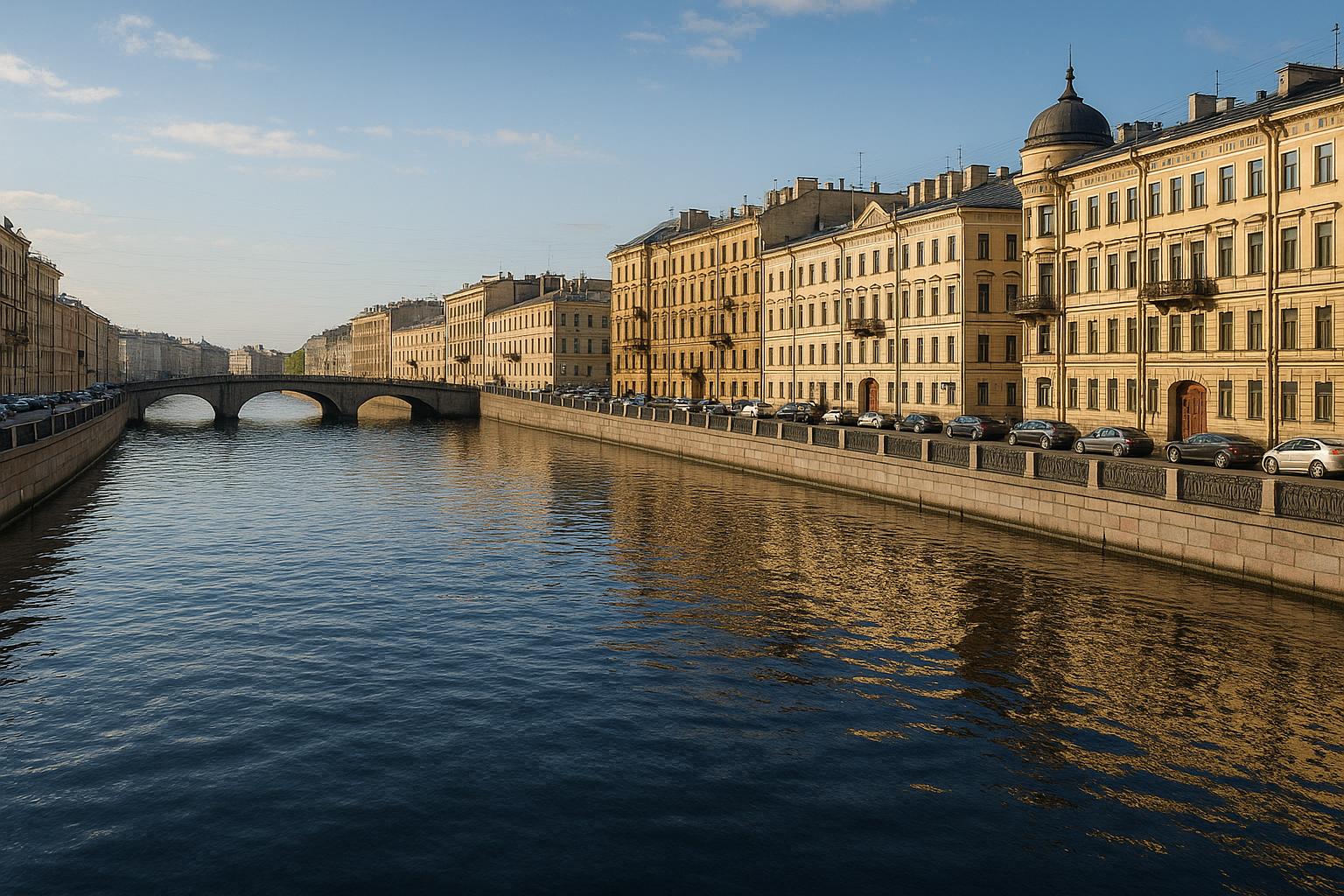
Geographical Overview of the Fontanka River
The Fontanka River is an essential geographical feature in Saint Petersburg, Russia. This man-made waterway, initially a branch of the Neva River, runs a course of approximately 7.6 kilometers through the city. Originating from the Neva’s left bank, Fontanka flows elegantly through various urban districts before uniting with the Neva at the Neva mouth.
The river has played a pivotal role in the topographical and cultural make-up of Saint Petersburg. It acts as a natural boundary within the city, dividing it into distinct areas and offering a picturesque view with its embankments lined with historic architecture. The importance of Fontanka is not merely geographical, but also historical and cultural, reinforcing the city’s status as a cultural capital.
Historical Context
The Fontanka River’s development can be traced back to the early 18th century. During this period, under the reign of Peter the Great, the river was transformed from a natural waterway into a formal canal. This effort aimed to improve the city’s water management systems and augment transportation routes. The river’s banks were fortified and lined with granite embankments between the years 1780 and 1790, enhancing its significance to the urban landscape. These embankments not only provided structural integrity to the riverbanks but also served as elegant promenades for residents and visitors.
The endeavor to formalize the river had multiple motivations. Providing a reliable waterway for transportation of goods and people was a significant factor in an era when waterways formed the backbone of trade and commerce. Additionally, landscaping efforts along the Fontanka were integral to the urban development plans orchestrated by Peter the Great, who envisioned a city that mirrored the great capitals of Europe, showcasing grandeur through both architecture and natural beauty.
Architectural Highlights Along the Fontanka
The Fontanka River is flanked by numerous significant architectural and cultural monuments in Saint Petersburg, which serve as echoes of the city’s opulent past. The Summer Garden, situated near the river’s origin, is home to a sprawling park that was established for Peter the Great in 1704. This garden not only showcases a collection of classical sculptures but also a stunning example of early landscape artistry in Russian history.
Further along the river lies the majestic Yusupov Palace, distinguished for its opulent design and historical intrigue. The palace has been a silent witness to many significant events in Russian history, including its role as the site of Grigori Rasputin’s assassination—a tale that continues to capture the imagination of historians and tourists alike.
Another notable structure is the Beloselsky-Belozersky Palace—a prime example of neo-baroque architecture which stands as a testament to the city’s architectural grandeur. The palace, with its vivid pink façade and richly decorated interiors, epitomizes the lavishness associated with the Russian aristocracy. The Fontanka’s banks are also graced by the famous Anichkov Bridge, renowned for its intricate horse statues sculpted by Pyotr Klodt. These statues have become iconic symbols of the city, merging art and architecture in a seamless narrative of cultural pride.
The Fontanka’s banks serve not only as a showcase for the city’s artistic endeavors but also embody the pursuit of aesthetic harmony between natural and constructed environments—a hallmark of Saint Petersburg’s urban design.
Transportation and Accessibility
Today, the Fontanka River serves as a key architectural anchor in the city and facilitates urban transportation. Numerous excursion boats ply the waters, offering tourists unique views of the city’s historical panoramas from the water. These boat tours are popular during the warmer months, providing convenient access to numerous landmarks along the river’s path.
The ease of navigation along the Fontanka has made it a favored route for sightseeing cruises, allowing visitors to experience the beauty of the city from a unique perspective. These tours offer glimpses of the city’s historical and architectural wealth, narrating tales of the past as they float by palaces, villas, and gardens that define Saint Petersburg’s breathtaking skyline.
Moreover, the river’s accessibility is enhanced by a series of bridges that connect its two banks, allowing easy pedestrian and vehicular movement across districts. This connectivity underscores the river’s role in linking disparate parts of the city and fostering an integrated urban experience.
Environmental Considerations
Efforts to maintain the Fontanka and its surrounding environments are ongoing. Ensuring the ecological stability of the river is crucial for both historical preservation and functional importance. Initiatives focus on water quality management and conservation of the embankments, preserving both their practical and aesthetic value.
Maintaining the Fontanka’s ecology involves meticulous monitoring of water quality to prevent pollution and manage waste, ensuring the river remains a viable and sustainable part of the urban ecosystem. Ecological conservation efforts extend to preserving the flora and fauna that thrive along its banks.
As the city continues to grow, the balance between development and conservation becomes critical. The Fontanka stands as a symbol of Saint Petersburg’s historical evolution, integrally tied to its cultural identity while also symbolizing the forward march towards sustainable urban living. For more detailed information on the Fontanka River, explore resources provided by the St. Petersburg government.
Through its vibrant course across Saint Petersburg, the Fontanka River narrates a tale of transformation—from a natural stream to a bustling urban canal, and now a serene historical landmark. Its waters, bridges, and banks continue to be integral to the life of the city, underscoring its importance both as a geographical feature and a cherished cultural asset.