
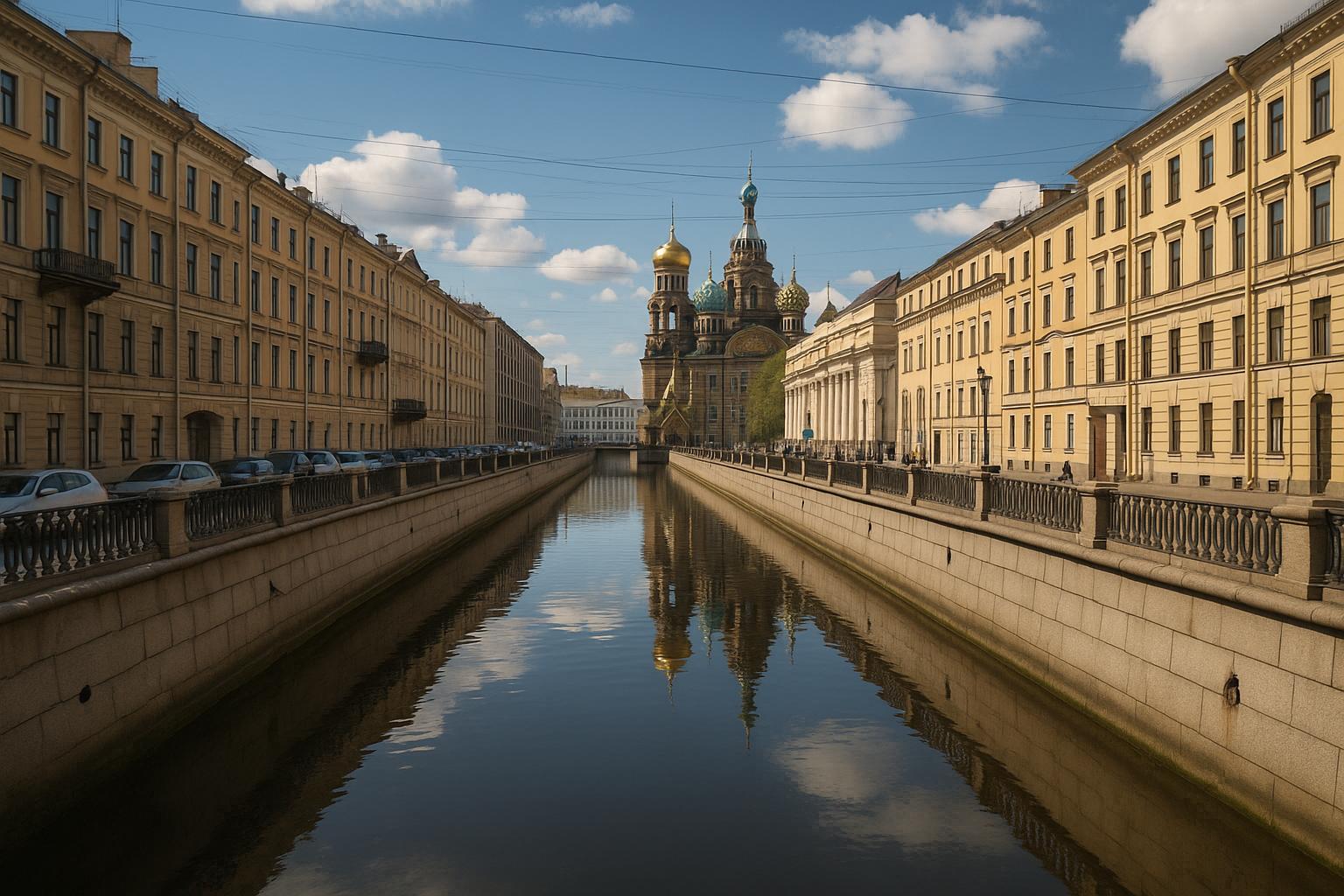
Griboyedov Canal Overview
The Griboyedov Canal is one of St. Petersburg’s iconic waterways, contributing significantly to the city’s historical water system. This canal is noteworthy not only for its practical functions but also for its breathtaking views and strong cultural ties.
Historical Background
In the 18th century, the vision of enhancing St. Petersburg’s water navigation led to the creation of the canal. Initially known as the Catherine Canal, it was named in honor of Catherine the Great. This project was a part of a broader initiative to develop the city’s infrastructure, integrating waterways into the urban landscape to facilitate transportation and communication. The canal was later renamed to honor Alexander Griboyedov, an influential Russian diplomat and playwright, paying homage to his contributions to Russian culture and history.
Urban Development
The Griboyedov Canal played a pivotal role in the urban planning strategies of St. Petersburg. Serving as a crucial component of the city’s drainage and navigation systems, it enabled efficient movement of goods and people. As the city expanded, the canal’s banks became prime real estate, prompting the construction of residential, commercial, and governmental buildings. The canal thus became a central artery in the city’s urban fabric, influencing development patterns.
Throughout history, the Griboyedov Canal has connected various districts, serving as a lifeline that nurtures the city’s growth. The link to commercial activities, combined with its picturesque setting, elevated its status to a sought-after location for both business and leisure, encouraging economic and residential expansion in surrounding areas.
Cultural Significance
The Griboyedov Canal is more than just a body of water; it’s an embodiment of St. Petersburg’s rich cultural tapestry. The canal is adorned with architectural marvels, offering passersby glimpses into the city’s artistic and historical past. One prominent landmark along its path is the Church of the Savior on Spilled Blood. This structure stands just off the canal, captivating visitors with its colorful domes and intricate mosaics. Built on the site where Emperor Alexander II was fatally wounded, the church holds profound historical significance. Its proximity to the canal makes it a compelling attraction for tourists and history enthusiasts alike.
Over time, the canal’s cultural milieu has inspired artists, architects, and writers, embedding it deeply into the city’s cultural psyche. Its scenic vistas are often depicted in paintings, literature, and film, memorializing its beauty and historical importance for future generations.
Modern-Day Relevance
Today, the Griboyedov Canal continues to be a vibrant thread in St. Petersburg’s fabric, maintaining its allure as a popular tourist destination. It provides scenic routes that display the architectural grandeur of the city, showcasing its historical edifices and lush landscapes. Regular canal cruises offer visitors a unique vantage point to explore St. Petersburg, highlighting the seamless blend of history and modernity. These tours grant an opportunity to appreciate the canal’s charm while observing the city’s evolution through time.
In modern times, the canal supports various recreational activities and public events, contributing to the dynamic lifestyle of St. Petersburg. Local festivals, art exhibitions, and cultural gatherings frequently take place along its banks, drawing both locals and tourists to participate in the city’s rich cultural life.
Accessibility
The Griboyedov Canal is strategically located within St. Petersburg, making it easily accessible by multiple public transportation routes. This accessibility enhances its appeal among both residents and visitors, facilitating convenient exploration of its surroundings. Public buses, trams, and metro lines all provide access points to the canal, making it a central destination for those wishing to delve into the heart of St. Petersburg.
Efforts to preserve the canal’s historical essence are ongoing, striking a balance between conservation and modern infrastructure needs. These initiatives ensure the canal remains an integral part of the city’s identity while accommodating the demands of contemporary life.
Staying informed about the canal and its attractions is beneficial not only for tourists but also for residents who wish to engage more deeply with their city. For more detailed information on visiting the Griboyedov Canal, a variety of travel guides and local resources can be consulted to enhance your experience, offering insights into the vibrant history and present-day charm of this unique waterway.
In summary, the Griboyedov Canal epitomizes the harmonious blend of history, culture, and urban development that defines St. Petersburg. Its waterways, lined with architectural and cultural landmarks, continue to resonate with the city’s past while actively shaping its future. As a bustling center for tourism and local activities, the Griboyedov Canal stands as a testament to the enduring spirit of this historic city.